Wuxi Huali Juneng · Pressure vessels and stainless tanks
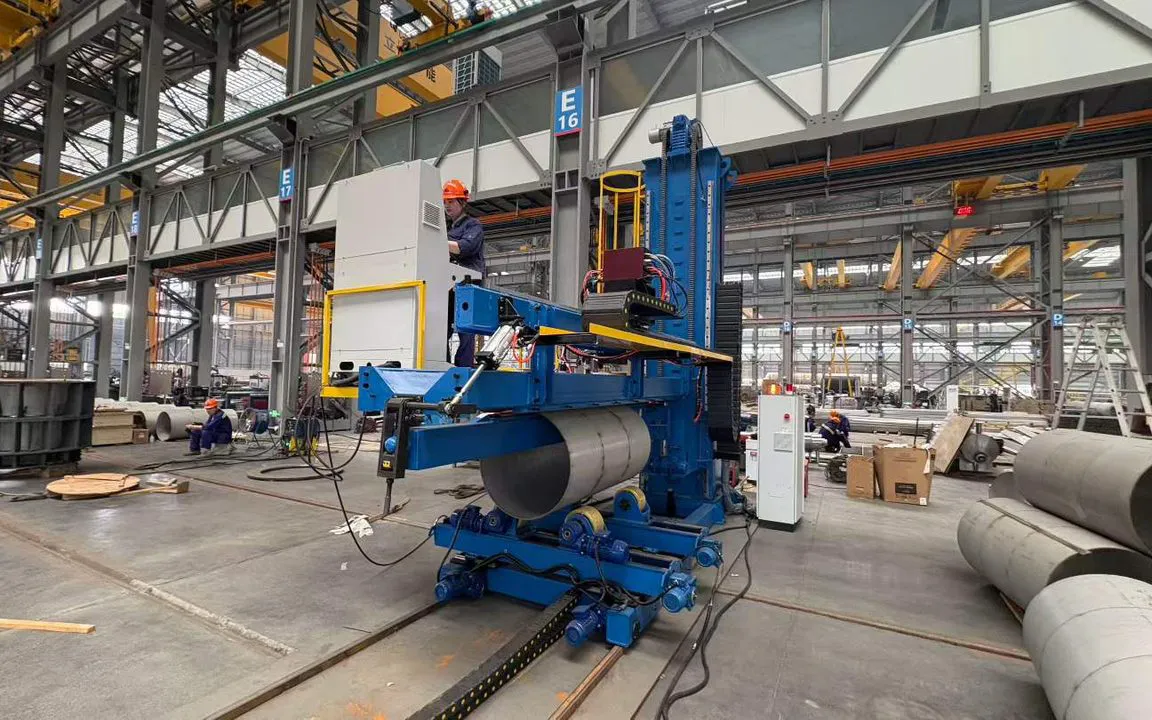
Plasma + TIG longitudinal seam welder delivered to Huali Juneng
A custom P+T (plasma arc + TIG) longitudinal seam welder for stainless tank and chemical pressure vessel shells. Stainless steel from 3 to 20mm is welded from one side with full back-bead, even reinforcement and no grinding afterwards. The machine is in steady production.
The production task
Longitudinal shell seams are long with narrow grooves, and the torch must stay on the groove centre line. Manual welding gave inconsistent bead appearance and first-pass yield, stainless shells are sensitive to parameter drift, a size change could mean half a day of trials, and the grinding station never ran out of work.
The system approach
Haibao split the welder’s hand, eye and feet into three axes: the column sets height, the boom sets reach and the floor rail sets the straight line. A cross slide aligns the torch to the millimetre, and VFD turning rolls rotate and align the shell. Plasma makes the root and TIG the cap, and current, voltage, travel speed, wire feed and gas flow are stored as recipes by diameter and wall thickness and recalled with one touch.
- Weldable thickness
- 3–20mm
- First-pass radiographic acceptance
- 99.5%+
- Operators per shift
- 1 person
- Weld quality complaints since delivery
- 0
Customer
Weld quality that no longer depends on one welder’s day
Wuxi Huali Juneng Equipment makes A1/A2 class pressure vessels and stainless tanks. This project is a dedicated machine for one operation, the longitudinal shell seam, combining welding process, mechanics and controls into a repeatable production routine.
- Parts: stainless tanks, chemical pressure vessel shells, heat exchanger shells
- Materials: mainly 304 / 316L stainless, also carbon steel and special alloys
- Process: plasma root + TIG cap (P+T)
- Status: delivered, in steady production
Project file
What was delivered
- Customer
- Wuxi Huali Juneng Equipment Co., Ltd.
- Machine
- Plasma + TIG automatic longitudinal seam welder (P+T)
- Configuration
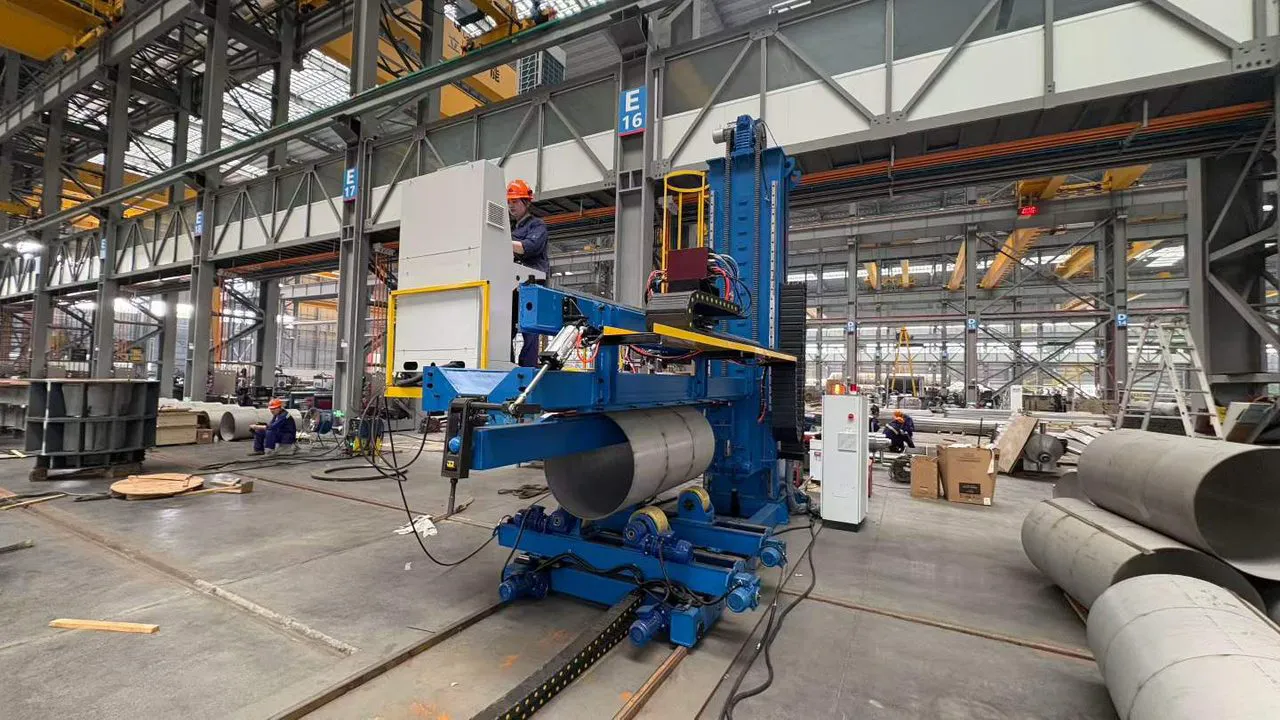
- Column + boom + cross slide + floor-rail carriage + VFD turning rolls + integrated welding cabinet
- Weld result
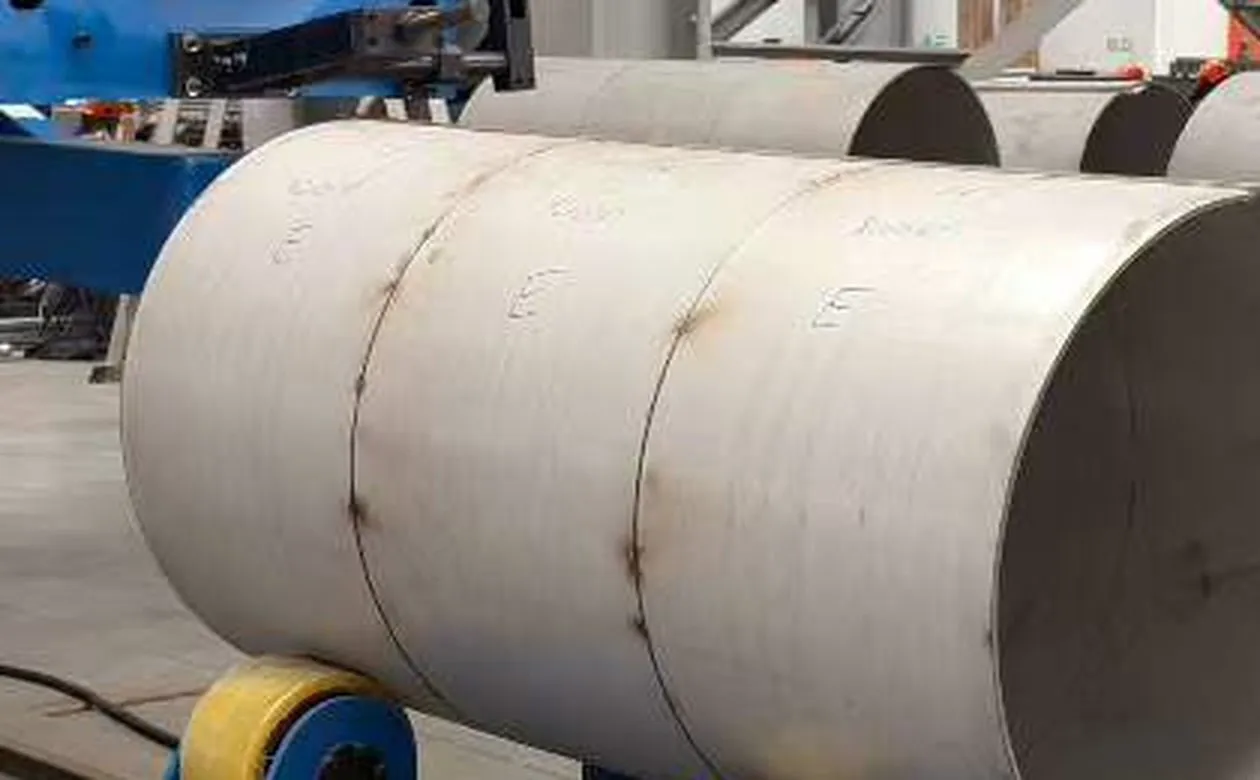
- Narrow bead, low even reinforcement, smooth toes, no undercut, porosity or spatter, no grinding
Key components
Cabinet and torch: automation you can see
The quality of a dedicated welder shows in two places: how the cabinet "thinks" and how steady the torch is.
Cabinet: experience becomes recipes
Current, voltage, travel speed, wire feed and gas flow are stored as recipes by diameter and wall thickness. A size change means recalling a recipe, not re-running trials.
Torch: steadiness built into the structure
The torch is carried by a cross slide, not held by hand. The slide aligns to the millimetre and the rail keeps the line over metres, so long seams run as if drawn with a ruler.
Floor-level operation
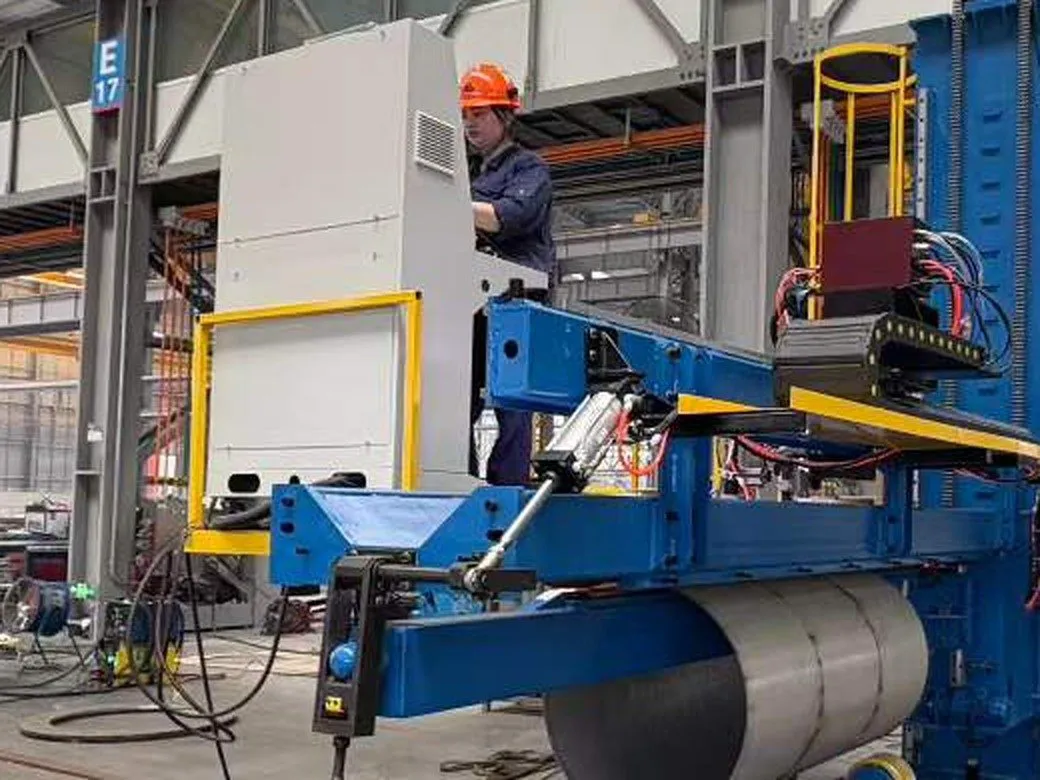
The integrated cabinet houses power and control, so the operator recalls parameters and monitors welding from the floor.
Rubber-lined rollers
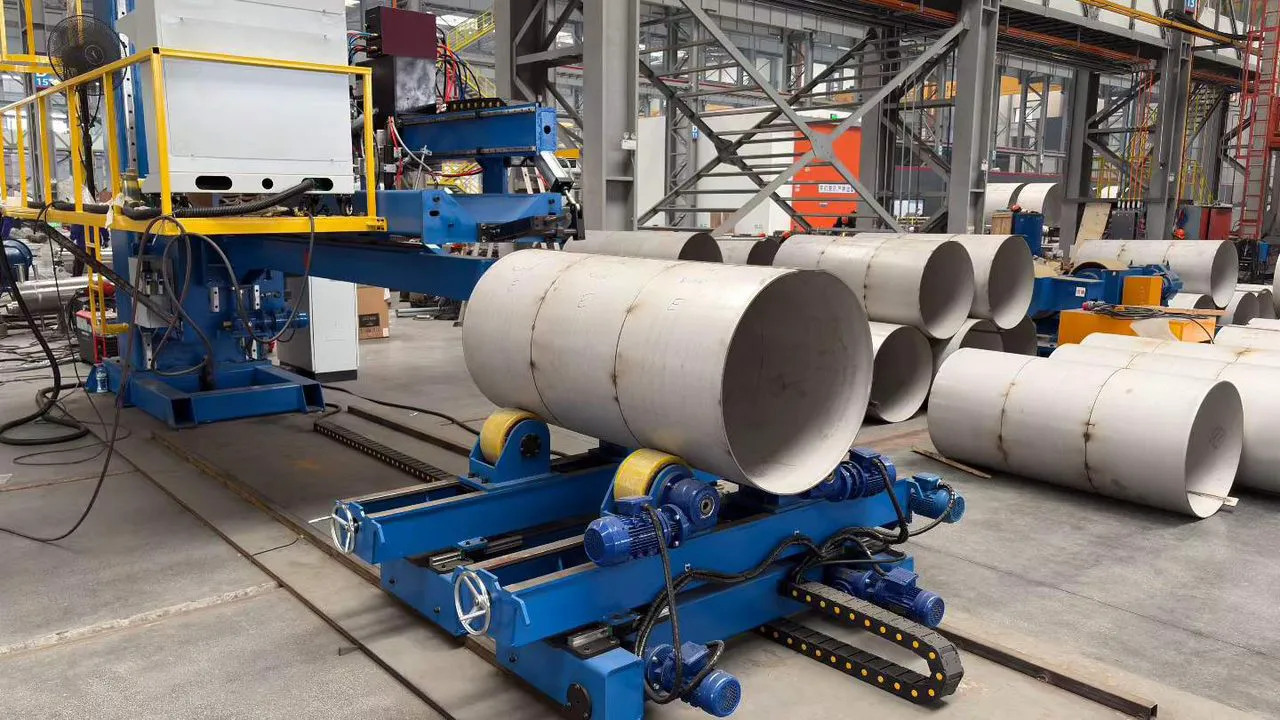
The VFD turning rolls use rubber-lined wheels that do not scratch stainless shells during rotation and alignment.
Process advantages
Why P+T instead of plain TIG
On the same seam, the process decides speed, distortion and grinding time.
Plasma root, deep penetration
High energy density penetrates 3–20mm stainless in one pass with a full back-bead, removing back-gouging and backing strips.
3–5 times faster
Compared with manual TIG, P+T welds much faster, which matters most on long seams.
Low heat input, low distortion
A narrow heat-affected zone keeps shell roundness and straightness, reducing re-rolling and rework.
Recipe-based parameters
Each diameter, thickness and material has a recipe. A size change is a recall, not a matter of the senior welder’s feel.
Safe and easy to maintain
Yellow guarding, a central cabinet and cable chains give clear inspection routes; wear parts change without removing major assemblies.
Production from handover
On-site installation, trial welds and training mean operators usually work independently within half a day to a day.
Specifications
Typical configuration
The platform is configured by shell diameter, thickness and output. Process windows for each material, thickness and joint are confirmed by procedure qualification (PQR/WPS).
PAW root + TIG cap
Process
Each can also be used alone.
304 / 316L, carbon steel, special alloys
Materials
Mainly stainless.
3–20 mm
Thickness
One-side welding with full back-bead, no backing or back-gouging, reduced or no bevel.
2000 / 3000 / 6000 mm
Seam length
Custom lengths available.
Φ300–Φ3000 mm
Shell diameter
Larger sizes on request.
1500 mm / 1500 mm
Column / boom stroke
Servo or VFD drive with rail and rack; cross slide for X/Z fine adjustment.
50–1000 mm/min
Travel speed
Stepless, linked to the welding process.
5 t / 10 t / 20 t
Turning roll capacity
Twin VFD motors, rubber-lined wheels.
PLC + touchscreen
Control
Recipe storage and recall, self-diagnosis.
Argon (Ar)
Shielding gas
Single gas supply, low consumable cost.
AC 380V / 50Hz
Power supply
Three-phase five-wire.
GB 150 / NB/T 47014 / ASME IX
Standards
Welding procedures developed to these requirements.
Delivery
From contract to volume production in four steps
The clearest change after start-up: welds look the same every time, and the grinding station is quiet.
01
Requirements and design
Machine size, stroke and tooling are set by shell diameter, thickness, material and output.
02
Build and factory acceptance
Assembly, dry runs and test welds; the customer visits to approve weld appearance and parameters.
03
Installation and process tuning
Positioning, levelling and utilities, then procedure qualification and trial welds on the customer’s parts.
04
Training and production
Operation and maintenance training and recipe handover, then continuous production with weld-quality follow-up.
FAQ
About the seam welder
What parts is it for?
Long straight seams on stainless tanks, pressure vessel shells and heat exchanger shells, 3–20mm thick, mainly 304 and 316L but also carbon steel and special alloys. The part sits on turning rolls with the seam on top and is welded flat in one pass.
Can it weld circumferential seams too?
Longitudinal seams are welded by travelling along the rail; circumferential seams by rotating the shell on the rolls. The machine is built for longitudinal seams, and with the VFD turning rolls it can also handle girth seams and alignment.
How many operators?
One operator handles loading, recipe selection and monitoring. After on-site training, operators usually work independently within half a day to a day.
What after-sales support is offered?
Installation, process trials, operation and maintenance training, spares, and remote or on-site support; parameters can be optimised for new materials and sizes.
On site
The weld speaks for itself
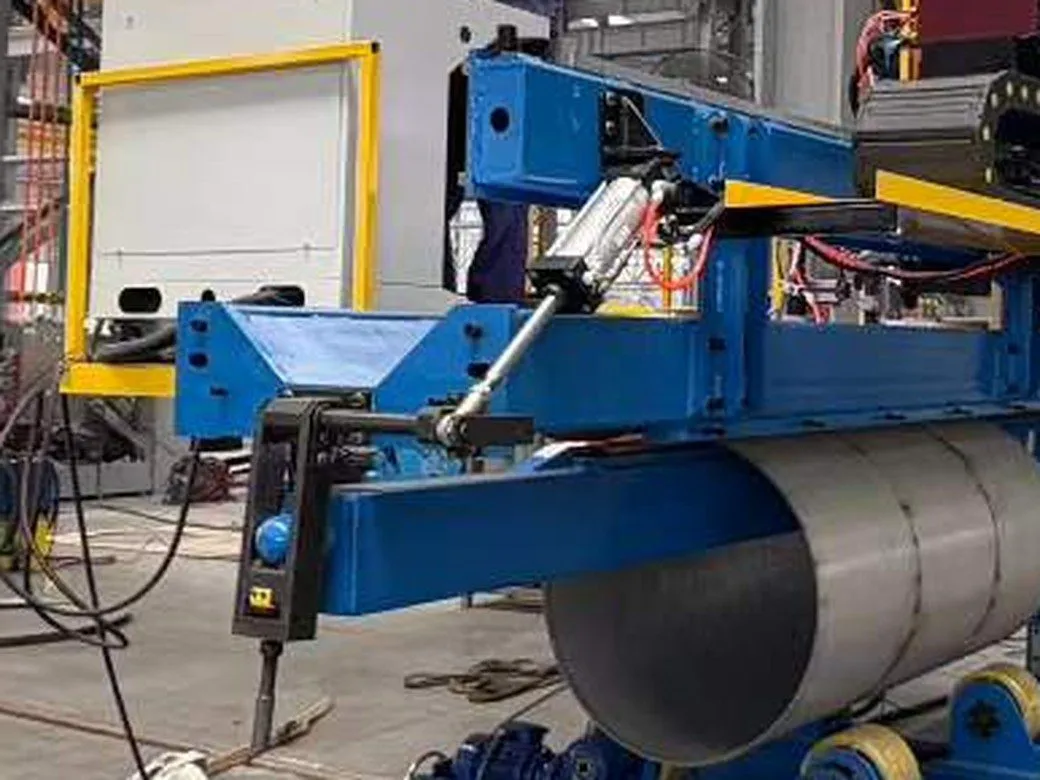
Welders judge a seam on three things: is it straight, is the reinforcement even, and does it blend into the base metal. Photos from delivery in Huali Juneng’s workshop.
Customer feedback
What the customer says
Weld appearance is far more consistent than manual welding. The longitudinal seams hardly ever need repair and there is much less grinding. Operators can work on their own after half a day of training, and changing sizes by recalling a recipe is quick.
Your longitudinal seams can be welded the same way. Tell us the material, thickness, diameter and seam length, and we will propose a process route, machine configuration and trial-weld plan.
Specifications are a typical configuration; the contract, technical agreement and final procedure qualification govern. Process windows for each material, thickness and joint must be confirmed by PQR/WPS.
What are you working on?
Tell us about your material, workpiece and production needs. Let’s find a practical starting point.
Discuss your project