Jiangyin Dongxin Pipe Fittings · Pipe fitting manufacturing
90° flanged elbow robotic welding cell for Jiangyin Dongxin Pipe Fittings
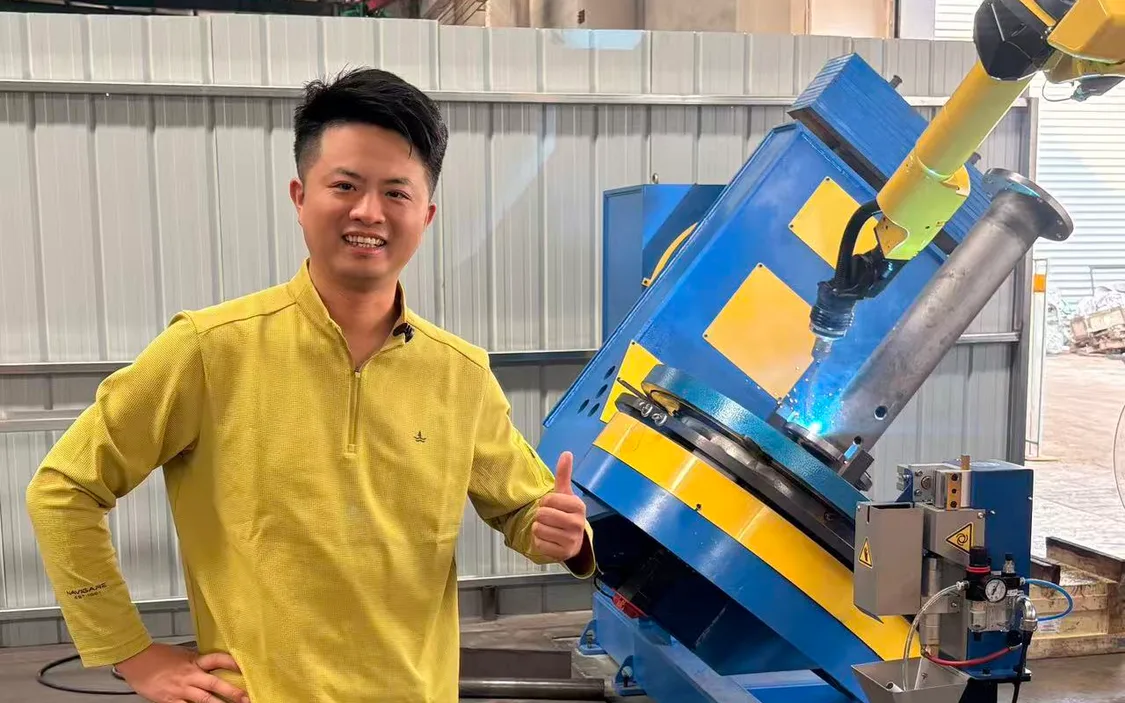
A full delivery from concept design and in-house pre-commissioning to on-site commissioning and operator training: one FANUC robot and a two-station L-type positioner weld the elbow, flanges and lifting lugs in a single clamping.
The production task
Three structures and three joint types meet in one part. Manual welding of the large-bore girth seams left many restarts and uneven beads, spatter on the flange sealing face meant grinding and rework, scattered lugs required repeated turning of the part, and skilled welders were hard to hire, which capped output.
The system approach
Haibao delivered a FANUC M-10iD/8L robot, R-30iB controller with arc-welding software, a two-station L-type tilting positioner, a PM500 pulsed MAG power source and a TBI 82W torch. The two stations alternate, touch sensing and arc tracking compensate for part deviations, and one-pulse-one-drop transfer keeps spatter low.
- Alternating L-type positioner
- 2 stations
- Maximum robot reach
- 2038mm
- Average speed on 16mm carbon steel
- 400mm/min
- Per part, 9700mm of weld
- 24.25min
- Trained to operate independently
- 3 people
Customer
Large-bore, thick-walled elbows that need consistent girth seams
Jiangyin Dongxin Pipe Fittings makes piping components. The main part is a 90° flanged elbow with lifting lugs, in carbon and stainless steel, large bore and thick wall. The project had three goals: consistent girth seams, protection of the flange sealing face, and output that no longer depends on hiring welders.
- Part: 90° flanged elbow with lugs, large bore, thick wall
- Material: carbon steel, stainless steel and others
- Process: pulsed gas-shielded welding, 80% Ar + CO₂
- Status: delivered, commissioned and in production
Project file
What was delivered
- Customer
- Jiangyin Dongxin Pipe Fittings
- Industry
- Pipe fittings / piping components
- Delivered
- Robot, controller, two-station L-type positioner, power source, torch, safety guarding
- Service
- Design → factory pre-commissioning → on-site commissioning → training and acceptance
Before delivery
Four problems the customer faced
Elbow, flange and lugs: three structures and three joint types, all in one part.
Manual girth seams, many restarts
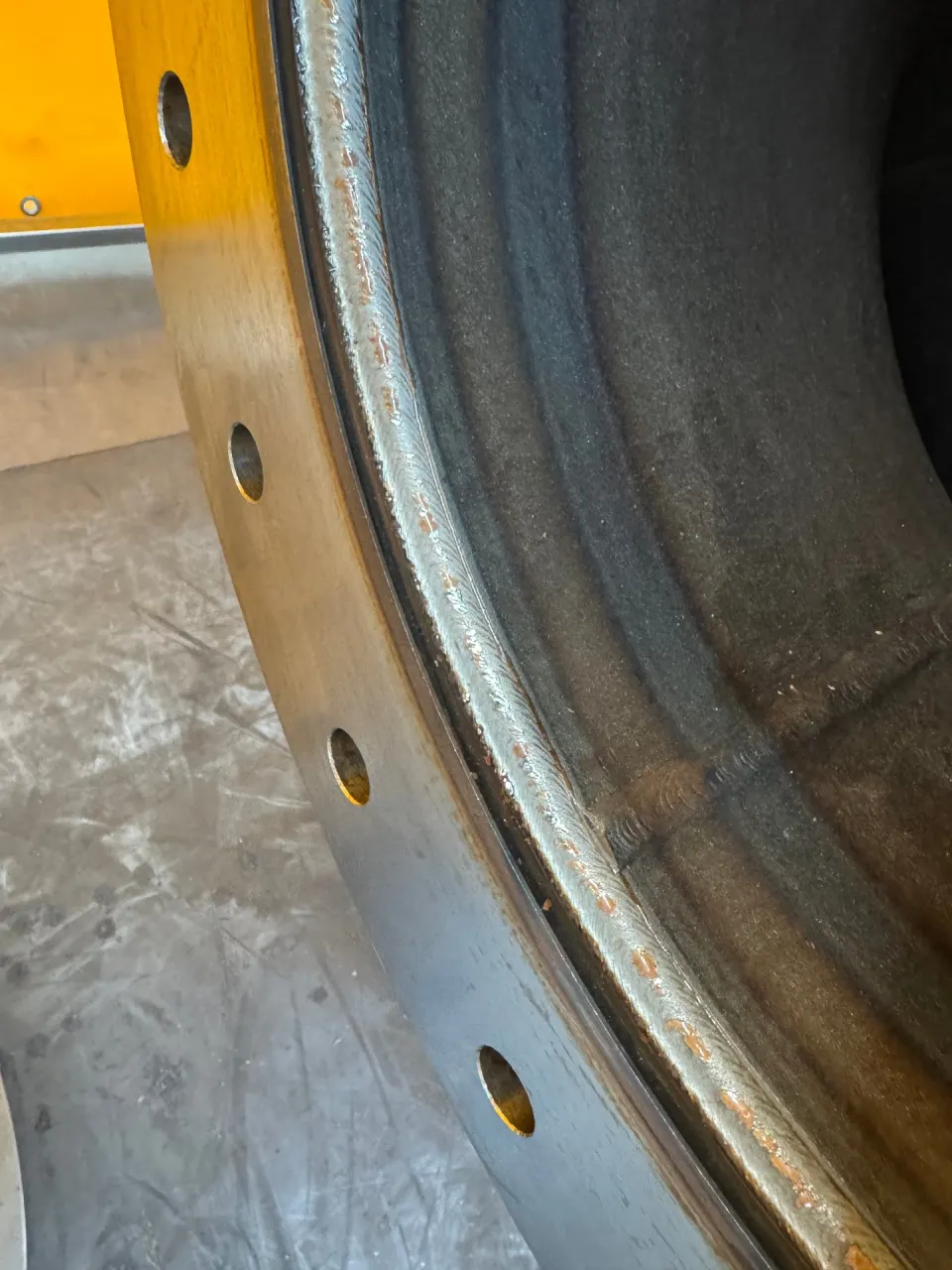
The elbow-to-flange seam is long. Welding it by hand meant repositioning and restarting the arc many times, so joint quality and bead shape varied.
Spatter on the sealing face
Any spatter or scratch on the flange sealing face had to be ground off or reworked, which delayed delivery.
Scattered lugs, repeated turning
Lugs sit on both sides of the elbow with welds facing different directions. Keeping them in the flat position meant turning the part again and again.
Skilled welders were hard to hire
Thick-walled parts are heavy work. Output and quality depended on the welders, and people were the hardest part of expanding capacity.
Configuration
One robot. One L-type positioner.
Two stations alternate, and every weld is completed in one clamping.
Changzhou Haibao
Robot system
FANUC M-10iD/8L robot; R-30iB controller in B-cabinet with cables; arc-welding software (touch sensing, arc tracking); colour teach pendant with 20m flexible cable; two-station L-type tilting positioner.
Changzhou Haibao
Welding system
PM500 gas-shielded welding power source; external VR11000 wire feeder; gas detection switch, regulator and flowmeter; gas hoses and control cables.
TBI (Germany)
Torch package
TBI 82W torch for hollow-wrist robots; mounting module and wire clamp; torch cable and bracket.
Master Hyper
Electrical and safety
PMC programming; electrical cabinet and cables; three-colour light and buzzer alarms; clamping cylinders, solenoid valves and fittings; safety fencing.
Master Hyper
System integration
Packing, shipping and insurance; installation, commissioning and acceptance; training so at least 3 employees can operate independently.
Delivery
Arrival on site is only the start
Commissioning and training decide whether the cell works well in daily production.
01
Requirements and part analysis
Confirm bore, wall thickness, material, flange standard, lug positions and batch size, then calculate weld length and cycle time.
02
Design and drawing review
Assembly and part drawings are reviewed with the customer item by item: robot reach, power source and torch capacity, fixture fit. Results are recorded in review minutes.
03
Build and factory pre-commissioning
The cell is assembled and tested in Haibao’s Changzhou factory, and ships only after motions and performance are confirmed.
04
Installation and commissioning
Robot, controller and power source are connected, external-axis coordination is calibrated, and each technical-agreement target is verified.
05
Training and handover
1–2 days of on-site training in teach programming, robot operation and routine maintenance, so that at least 3 employees can work independently.
In production
How the cell performs
What matters is whether it is still producing steadily three months later.
Two stations, almost no idle time
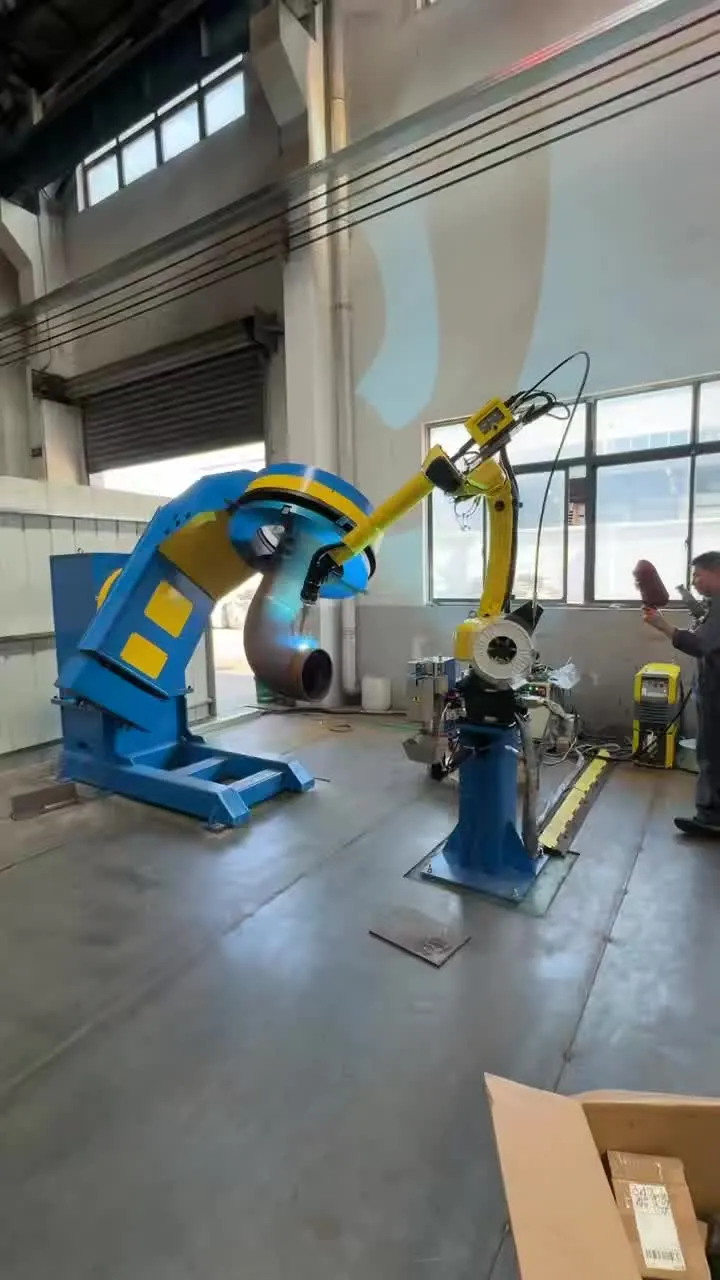
While station 1 welds, the operator loads and clamps the next part on station 2. When the weld finishes, the robot moves straight to station 2.
One clamping, every weld
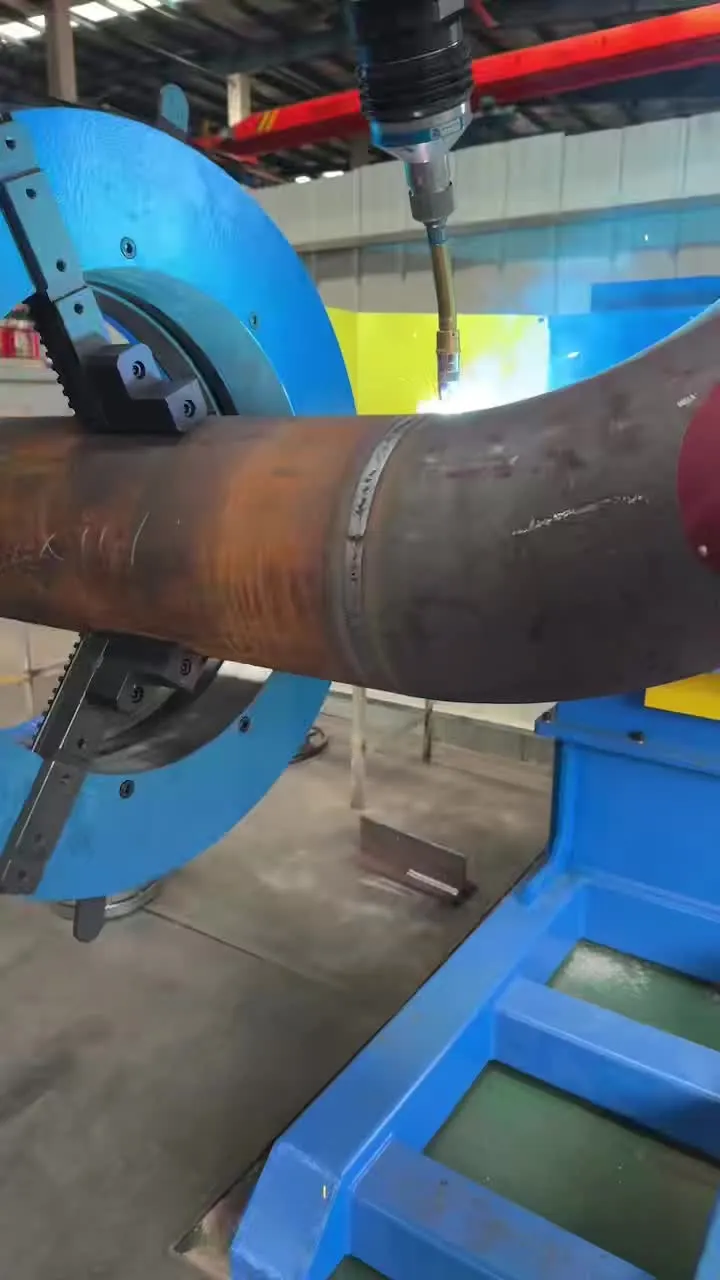
Elbow girth seams, inner and outer flange fillets and lug fillets are welded in the same fixture, cutting re-clamping errors and crane time.
The robot compensates for part deviations
Touch sensing finds the actual offset at reference points, and arc tracking corrects the path while weaving. Fit-up gaps and heat distortion no longer rely on the operator’s eye.
Low spatter, less grinding
Pulsed MAG transfers one drop per pulse with a cooler droplet and much less spatter. The flange sealing face needs no extra spatter cleaning.
On site
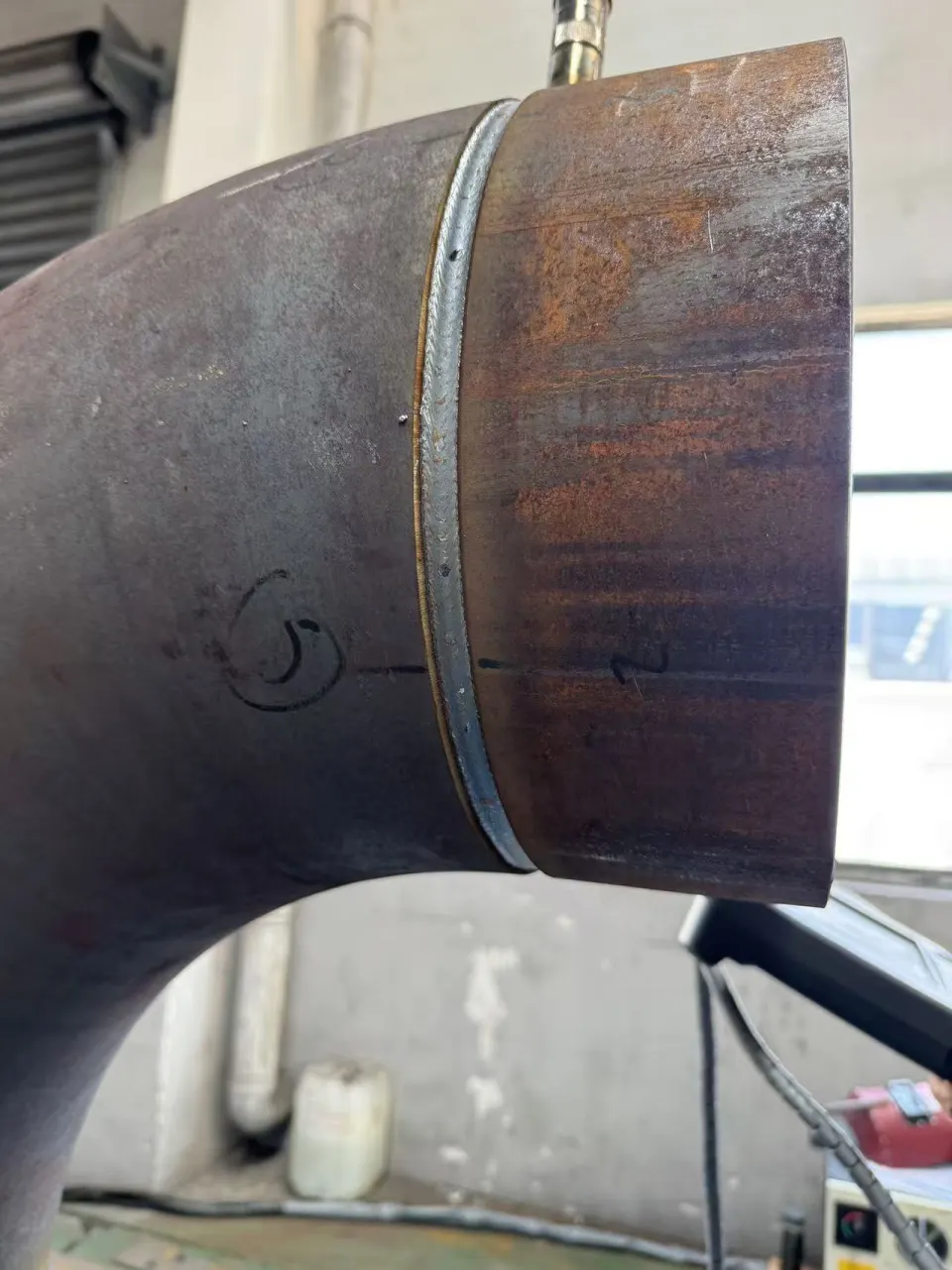
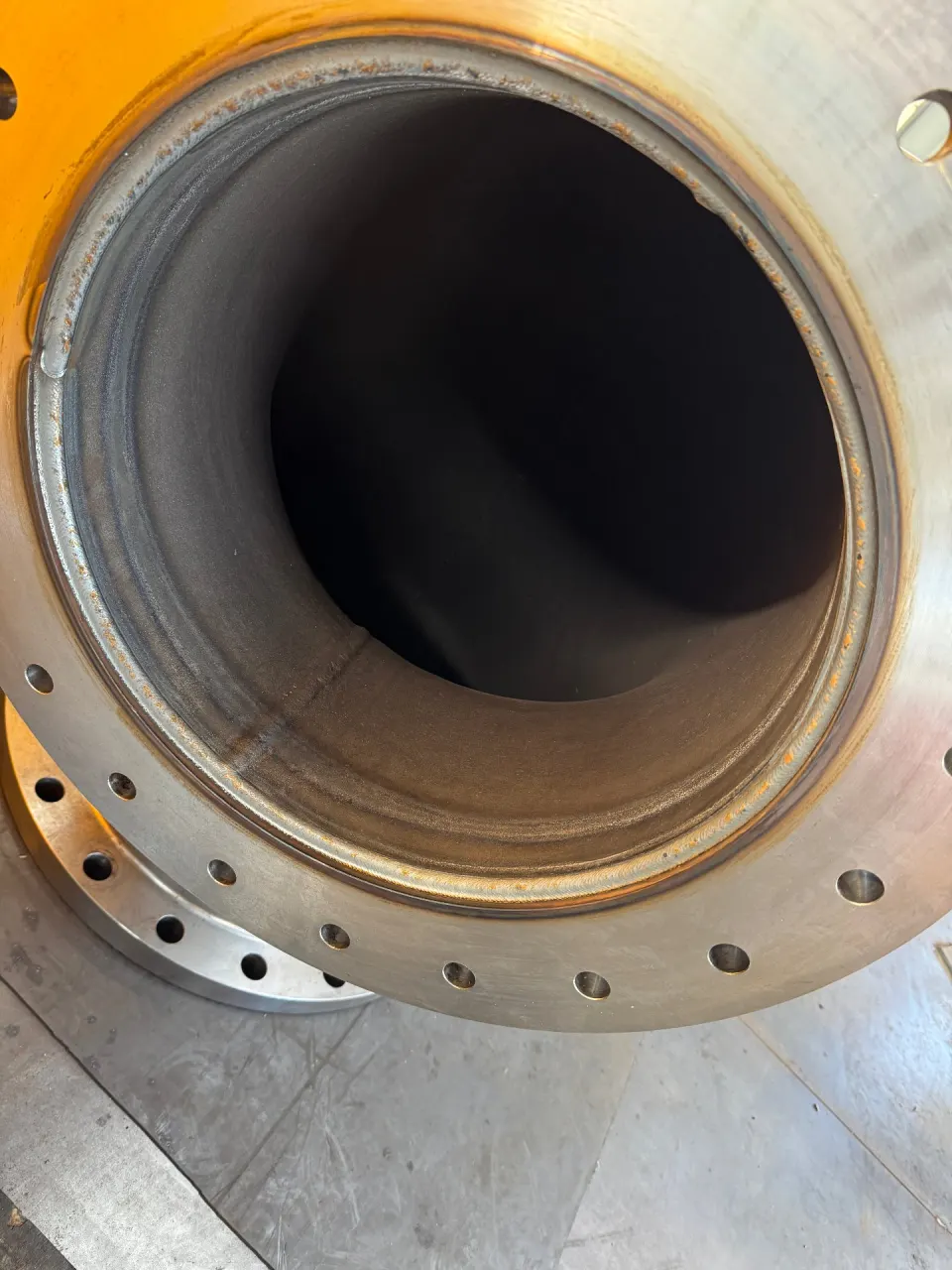
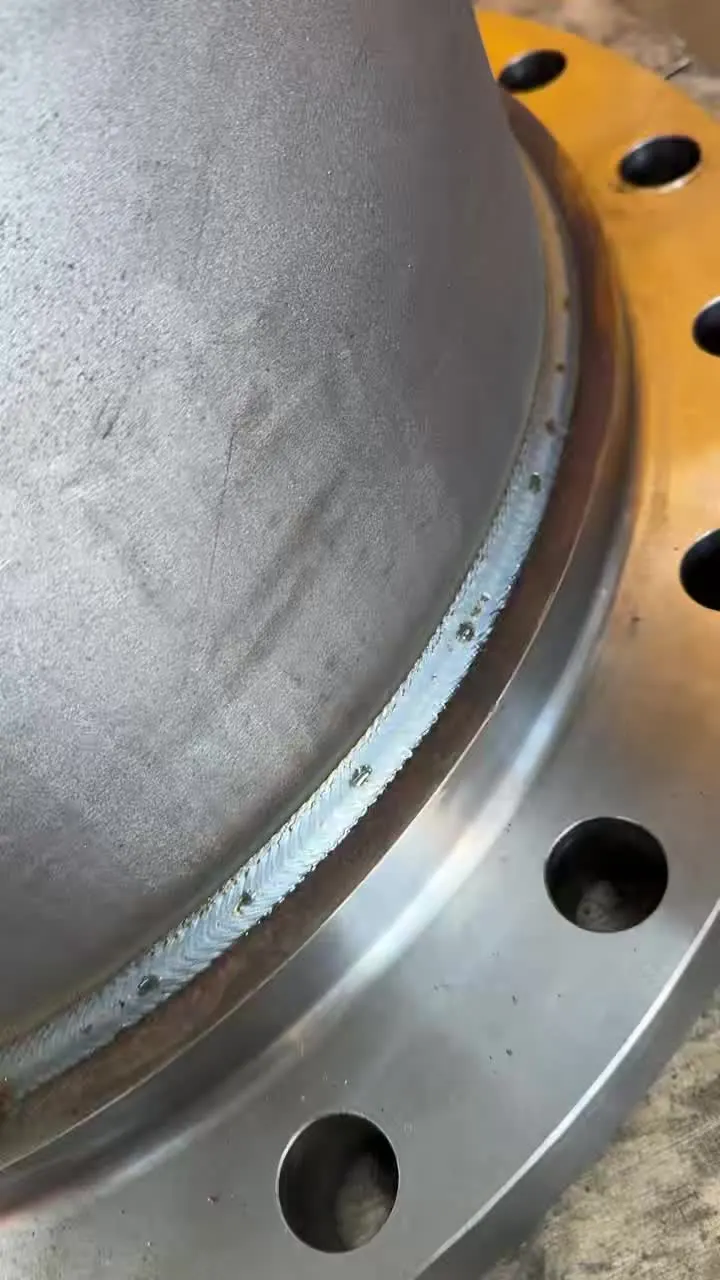
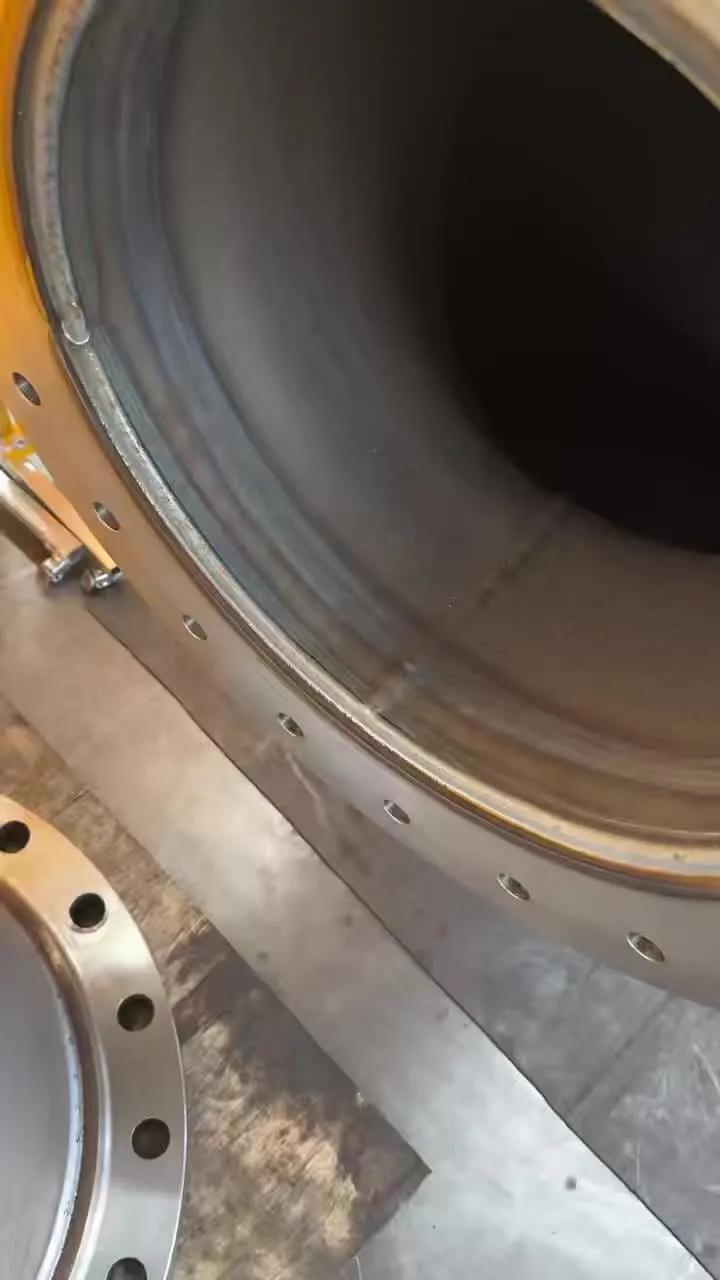
Welded in one clamping
Photos taken at the Changzhou Haibao welding cell during actual production. Each part is welded by the robot in a single clamping.
Customer feedback
What the customer says
Commissioning went smoothly after the cell arrived. The two stations really save effort: one person can watch both. The elbow girth seams are much more consistent than our manual welding, and we hardly need to grind spatter off the flange faces any more. After two days of training our operators could adjust programs and change parts themselves, and we are pleased with that.
Looking for a similar case in your industry? Send us the bore, wall thickness, material, flange standard, lug positions, batch size and delivery schedule, and we will propose a positioner, station layout and welding time per part.
Technical data on this page is taken from the FANUC robot + L-type positioner technical agreement. Final configuration is subject to the contract and technical agreement; part dimensions, joint design and cycle time must be calculated from the actual drawings.
What are you working on?
Tell us about your material, workpiece and production needs. Let’s find a practical starting point.
Discuss your project